Business Name: Manning Detail & Coatings
Address: 1812 W Sunset Blvd #30, St. George, UT 84770
Phone: (435) 572-0451
Manning Detail & Coatings
Manning Detail & Coatings is a mobile detailing and ceramic coating outfit that offers a shop, specializing in paint correction and ceramic coatings.
1812 W Sunset Blvd #30, St. George, UT 84770
Business Hours
Monday thru Sunday: 9:00am - 6:00pm
Facebook: https://www.facebook.com/manningdetail.coatings/ Instagram: https://www.instagram.com/manningdetailandcoatings/ YouTube: https://www.youtube.com/@manningdetailandcoatings
Ceramic finish has made a loyal following for a factor. Done right, it provides paint a deep gloss and outstanding resistance to water identifying, chemical etching, and ecological fallout. Done wrong, it secures every swirl, haze, and sanding mark under a shiny, long lasting layer that ends up being harder to eliminate later. The difference isn't the brand name of the covering so much as the surface area it bonds to. That is why proper paint correction before finish isn't an upsell. It is the foundation that lets the chemistry work the method it was designed.
I have fixed and layered automobiles that were two days old and others with a decade of wash marring. I have seen 20-hour corrections transform ignored clear coat into a mirror, and I have likewise enjoyed rushed "prep just" tasks trap holograms below a ceramic layer that would have lasted longer than the vehicle's funding. The lesson repeats itself: the much better the correction, the much better the covering looks and the longer it holds up. If you appreciate outcomes more than a fast turn, treat paint correction as the vital step in any severe car detailing plan.
What ceramic coating can and can not do
Modern ceramic coatings are typically based on silicon dioxide (SiO2), sometimes blended with silicon nitride or titanium dioxide. They cross-link as they cure, forming a dense movie that anchors to the pores and microscopic texture of clear coat. That bonded movie boosts surface hardness compared to bare clear, raises the contact angle so water beads and sheets, and decreases how quickly grime sticks. In real-world terms, you clean less, you fight fewer water areas, and you get a richer, wetter appearance when the sun strikes the panels.
What the finish can refrain from doing is fill or hide defects in any significant method. Think about clear coat like glass. If the glass is scratched, a thin transparent layer on top won't make the scratch disappear. It may silence it under certain lighting, but it's still there. Coatings include microns, not millimeters. They are thin by style. Anticipating them to fill swirls resembles expecting wax to fix hail damage.
Coatings also enhance what they rest on. If you have dullness from oxidation, holograms from a wool pad, or half-buffed compound residue in a symbol recess, the covering will lock it in, include clearness, and make it more apparent. That optical clearness is a gift when your paint is corrected. It is a magnifying glass for excellent work or for shortcuts.
Why paint correction comes first
Paint correction levels a very thin part of the clear coat to get rid of defects and restore consistent reflection. That unified surface area is precisely what ceramic chemistry requirements. Smooth, even paint offers constant bite for bonding, consistent movie density, and fewer trapped pollutants that would interrupt the coating's network. It likewise offers you a true baseline to judge the finish's performance instead of letting problems mask it.
Corrected paint makes a finish more long lasting. I determine increased lifespan on remedied paint for two factors. First, correction removes oxidized, jeopardized clear that would otherwise stop working too soon under the finish. Second, the improved surface area energy and consistency improve adhesion. When the covering is anchored well, it resists abrasion and chemical attack longer. On daily-driven cars and trucks that live outside, an effectively corrected and covered surface typically stays vibrant for 24 to 36 months before performance meaningfully tapers. Without correction, the exact same item may lose crisp hydrophobics and gloss within a year, in some cases sooner.
There is also a maintenance advantage. Post-correction, panels wash cleaner. Less texture indicates less dirt embedment and less wash-induced micro-marring. That reduces the abrasives you require throughout upkeep, which helps the finish survive.
A realistic look at paint correction levels
Not every cars and truck needs a complete multi-stage correction, and not every owner wishes to get rid of that much clear. Great auto detailing is about judgment. The objective is to remove the least quantity of paint needed to satisfy a defined standard.
- Enhancement polish: A single refining action with a completing polish on a soft foam pad. It removes light wash ruining and haze, normally 20 to 40 percent of visible flaws, and can brighten the finish considerably on new or well-kept automobiles. Clear coat loss is typically minimal, frequently listed below 1 micron per pass depending on product and paint system. One-step correction: A modern "one-step" polish on a medium foam or microfiber pad, often with a decreasing abrasive that can cut and complete in one cycle. It targets moderate swirls and light scratches, frequently correcting 50 to 70 percent of problems. This is a popular choice for mobile detail customers who want a fast turn-around without the cost of multi-stage work. Two-step correction: A compound phase to level deeper flaws followed by a finishing phase to restore gloss and remove compounding haze. Expect 70 to 90 percent correction on many factory clears. Time investment boosts, and pad, product, and maker selection matter more to prevent holograms. Multi-stage/ area correction: Targeted intensifying on particular panels or RIDS (random isolated deep scratches), then a worldwide refining pass. Used when most of the automobile is good, but the hood or trunk has much deeper issues.
Numbers are context-dependent. A 7-year-old black German sedan with difficult clear acts differently than a 2-year-old Japanese hatchback with softer paint. The important part is to match the correction strategy to the automobile's condition, clear coat health, and the owner's tolerance for expense and clear removal.
How correction improves ceramic performance in practice
Imagine two identical vehicles, both washed and chemically decontaminated. One gets a fast maker glaze with oils that cosmetically fill small defects, then a ceramic coating. The other gets a true one-step correction that really levels those problems, a stripped surface area, then the exact same ceramic coating.
The very first car will look good on day one. The oils from the glaze and the finishing's gloss agents will produce an abundant sheen. Within a couple of washes, the filling oils get rid of underneath the finishing, but the defects remain, and the increased clearness from the coating makes them more obvious. Water behavior may begin to falter where glaze residue stayed, because it damages the finish's bond in those zones.
The second automobile will look clean and crisp on day one, however it is week eight that tells the story. The finishing beads regularly throughout every panel. There are fewer dull spots, and wash-induced swirls appear far more slowly. Decontamination is easier because the surface is smooth and uniform, so iron fallout and traffic film have fewer edges to grab.
On my own test, a daily-driven black SUV corrected with a determined one-step and coated with a mid-tier ceramic item held tight, uniform beading for 18 months with month-to-month washes, quarterly topper use, and no garage. A comparable SUV, same item, however only decon and a glaze under the finishing, revealed patchy beading on the hood in 6 months and required a light polish and recoat at month twelve.
The preparation that sits between correction and coating
Paint correction is not the last action before application. The surface area must be surgically tidy. Polishes contain lubricants and binders that leave trace residues. If you do not remove them, you lower surface area energy and lower the covering's capability to anchor.
An effective sequence appears like this: thorough wash to eliminate heavy soils, chemical decontamination with iron cleaner and tar remover as needed, mechanical decontamination with a clay bar or clay media, then correction. After correction, blow out crevices with compressed air, then clean panel by panel with a dedicated panel prep option. These are typically solvent blends developed to lift oils without swelling the clear coat. Work little areas and flip towels typically. Prevent family isopropyl alcohol at high concentration on fresh paint, as it can soften or haze delicate finishes, specifically on softer Japanese clears or repainted panels with insufficient cure.
Temperature and humidity matter. The majority of ceramic coatings flash and best in the 60 to 75 F range with moderate humidity. Too cold and they can rainbow or withstand leveling. Too hot and they might flash before you can clean uniformly. If you are doing mobile detail work, bring a canopy, display panel temperatures, and schedule application when the sun is off the car.
Matching the correction to the coating
Some coatings are more forgiving on surface quality. Others resemble a high-definition camera that reveals whatever. Ultra-thin, ultra-hard coatings can magnify micro-marring. If you prepare to utilize a jewel-level covering on a black or dark blue vehicle, take the surface one notch even more than you think you need. A real finishing step on a soft foam pad with a fine polish can erase the faint tick marks that medium microfiber leaves behind.
Conversely, if you are using a consumer-grade finishing on a white or silver day-to-day driver that lives under trees, a strong one-step correction might be all that paint requires. The decrease in noticeable flaws on those lighter colors is often adequate to optimize perceived gloss, and you keep more clear coat in reserve for future corrections.
Time and cost: where worth truly sits
Owners often balk at the rate distinction between a "finishing just" plan and a correction plus covering. I do not argue with spending plans. I discuss the outcome. If your automobile is brand name brand-new and genuinely defect-light, a mild enhancement polish and a finish can be a smart, efficient option. If the automobile already reveals wash marring and dealer-installed holograms, avoiding proper correction indicates paying to lock those into place. Most people prefer to pay as soon as to do it right.
There is a long-game expense, too. Every correction eliminates a slice of clear. If you coat over corrected paint, you slow down how often you require to correct in the future. That conserves clear coat and helps preserve resale worth. Over five years, the owner who purchases a thorough correction and a quality ceramic coating frequently spends less than the owner who cycles through duplicated light polishes and shorter-lived sealants.
Where mobile detail shines and where it requires adapting
Mobile detail services can absolutely deliver high-end correction and ceramic coating, offered the service technician controls variables. Dust is public enemy number one when correcting. A tidy, evaluated work area, matting under the cars and truck to lower grit, and disciplined towel management are necessary. Battery-powered polishers assist reduce cables on rough pavement. Lighting matters more than the room you remain in; I take a trip with color-corrected LEDs and position them so they rake throughout the panel, making swirls and haze visible.
For covering application on the move, manage weather condition. Avoid wind that can carry debris onto ugly surfaces. Keep the vehicle under shade or a canopy so panel temperature levels stay constant. If you can not manage those aspects, adjust the plan. Carry out the full correction on-site and schedule the ceramic application for a garage see, or switch to a professional-grade sprayable finish developed for mobile conditions that still cross-links well however has a more flexible flash time.
The tools and strategies that make or break correction
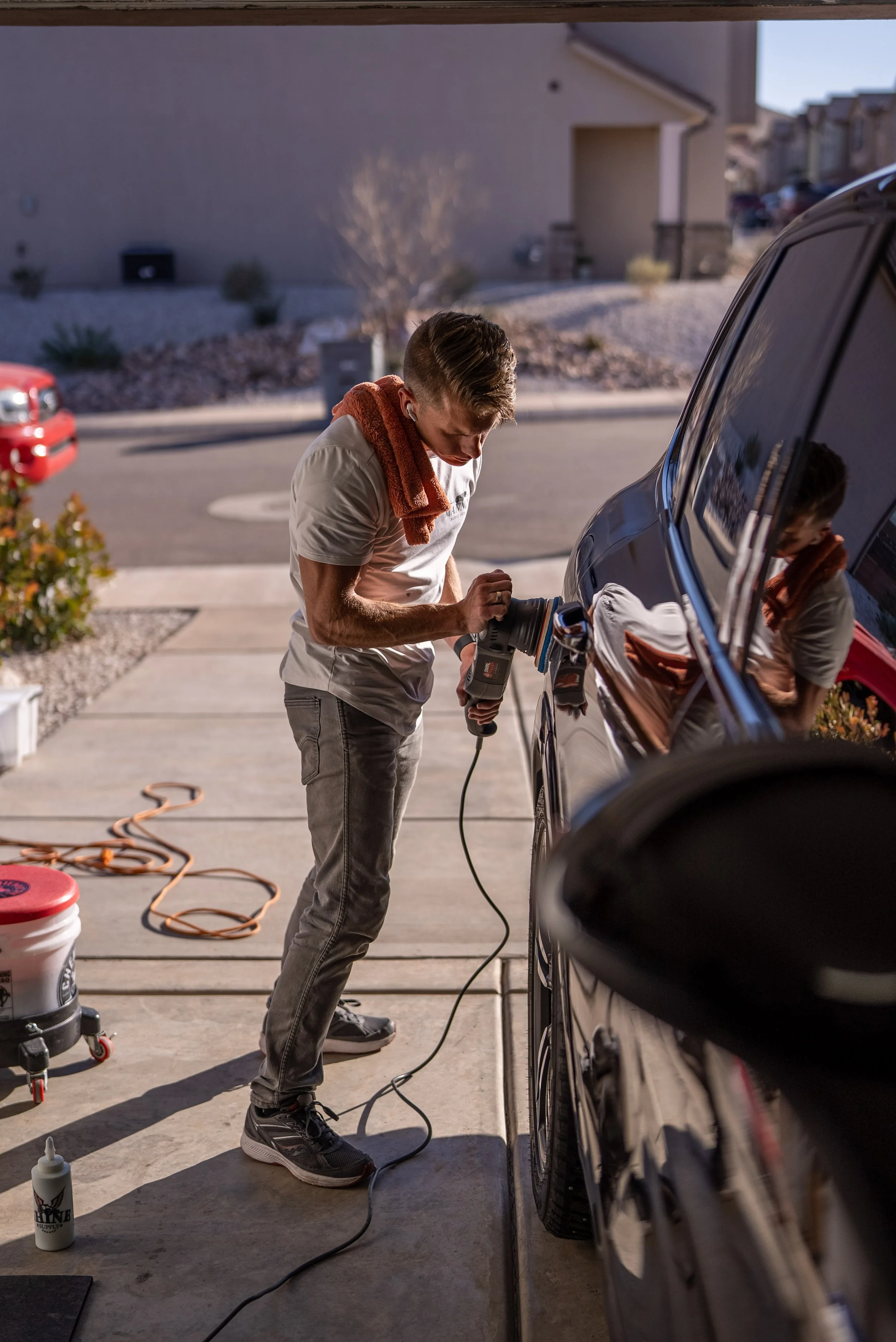
Swirl elimination is not a mystical art, but it does demand the right combination of pad, product, and pressure. On most contemporary clear coats, a dual-action polisher offers a safe balance of cut and surface. Microfiber cutting pads coupled with a medium substance can quickly knock down the bulk of ruining, however they often leave a shallow haze that a foam completing action gets rid of. If you can see the faintest tick marks in bright sun, you still have work to do before you coat.
I like to check on a two-by-two-foot square with 3 mixes before I dedicate. For instance, medium microfiber with a lessening substance at slow arm speed and moderate pressure, then soft foam with an ultra-fine polish at faster arm speed and very little pressure. The test area sets the workflow and gets rid of surprises. Measure paint density if you have a gauge. While gauges are an investment, they inform you when a trunk lid has been repainted thinner than the remainder of the cars and truck or when you are approaching danger on an older hood that began low.
Keep your pads tidy. A gummed-up pad cuts badly and produces heat. Swap to a fresh pad regularly, and blow the face out with compressed air after every section. Clean pads shorten your total correction time since they cut efficiently, which means less time on the panel and less heat in the clear.
Edges, badges, and the locations issues hide
Edges and raised body lines carry less paint. Prevent home there with aggressive pads. Tape delicate locations, soft plastics, and PPF edges. If you are covering a cars and truck with partial paint protection film, note that some substances can stain the movie if residue is not gotten rid of promptly.
Badges, washer nozzles, and mirror bases collect spent polish that can seep out later on and stain a fresh ceramic layer. Work brushes and panel preparation into those seams. If a vehicle has been formerly covered, decon takes longer. Many coatings withstand iron removers and clay. In those cases, a light abrasive cleaning polish might be required to strip the old layer before you start real correction.
How to inform when you are prepared to coat
Under strong, raking light, the panel ought to reflect dramatically with no gray cast. Look from multiple angles. If you see tight, shallow halos, you are seeing completing haze. If you see straight-line marks, examine your technique and towel handling. After your last polishing pass, wipe with a dedicated panel preparation and recheck. If the gloss drops when you clean, oils were masking light marring. Keep refining till the cleaned panel still looks crisp.
Run a clean nitrile-gloved hand gently over the paint after the panel preparation clean. It needs to feel squeaky and grabby, not slick. Slickness indicates residue stays. Move slowly. This step frequently makes or breaks bonding.
Application and leveling, the quiet factor of success
Every ceramic item has its own working window. Some desire cross-hatching, some prefer straight lines, some want longer set times on cool days and much shorter on warm. Follow the manufacturer's directions, however also read the paint. If the rainbowing starts to hone and then freeze, level right away. If the item streaks as you wipe, your towel is saturated or the humidity is too low. Switch towels frequently. Fold to a clean face. If a high area appears after treatment, do not chase it with more covering. Lightly polish that area with an ending up polish, wipe tidy, and reapply.
Thickness originates from even protection, not heavy application. A thin, well-leveled coat bonds better than a heavy, smeary one. Numerous pros apply two coats for protection insurance, not to double the thickness. If you layer, give the very first coat its recommended window to treat before including the second.
Maintenance, where the payoff shows
Once the covering treatments totally, everything that follows is lighter work. Use pH-balanced shampoos, soft wash mitts, and clean drying towels. Avoid tunnel washes with brushes if you can. If water habits begins to taper, decontaminate with an iron remover and a moderate alkaline prewash. Many finishes respond well to toppers or "boosters" every few months, which bring back slickness and hydrophobics without changing the underlying bond.
Corrected, covered paint lets you wash more carefully because you do not need to scrub to pull grime from micro-scratches. That maintains both the finishing and the remaining clear coat. If you do get a scuff, address it surgically. Spot-polish the area with an ultra-fine polish, then recoat just that section. There is no requirement to rip the whole vehicle down and start over unless the damage is widespread.
Common faster ways that mess up results
Two practices trigger most finish complaints. The very first is polishing with a glaze or an all-in-one that leaves fillers, then skipping a correct panel prep. The 2nd is under-correcting and after that applying a store ceramic anticipating it to mask defects. Both save time in the moment and create issues that take far longer to fix. A third close competitor is coating over insufficient decon. If the clay gets tar or iron and smears it throughout the panel, you can trap it under the covering where it later blooms into spots. Work tidy, rinse frequently, and alter clay media when it loads up.
Rushed mobile detail conditions can tempt these faster ways. The ideal answer is to scale the job to the environment. If the wind kicks up dust, stop correction and reschedule the finishing step. If daylight runs short, do not coat by patio light. Finish the preparation and return to apply under regulated lighting.
The trade-offs worth considering
Paint correction gets rid of product. If you plan to keep a vehicle for 10 years and you like to chase after perfection every season, reassess. A measured method at the start, then mild upkeep afterward, maintains clear coat and your wallet. For track cars and trucks that see more rubber marbles and cone scuffs, consider a somewhat less aggressive correction paired with a robust ceramic coating on all high-impact locations, and accept a few flaws. Utility cars used for hauling or winter season duty advantage more from chemical resistance and ease of washing than from a 95 percent correction that might be jeopardized the next time a snow brush comes out.
For collectors and weekend cars and trucks, purchase the deeper correction once, apply a top-tier covering, and then keep hands and towels off as much as possible. Usage contactless prewash approaches, and the finish will remain near-perfect for several years with little intervention.
When simple is smart
There are cases where a full correction is unneeded. A brand-new white SUV with small dealership swirls might look exceptional after an enhancement polish and a ceramic coating. The time conserved can go into meticulous trim finishing, glass finishing, and wheel protection, which change day-to-day use. The identifying element is not the calendar age of the cars and truck however the paint's condition under correct lighting. Inspect, evaluate a section, and make a strategy that fits.
Why this method exceeds product-chasing
Product loyalty is great, however the preparation controls the outcome. I have actually applied affordable coverings on paint that was fixed to a high requirement and enjoyed them beat premium finishings placed on inadequately prepped surface areas. The difference is the surface, not the label. If you have actually limited budget plan, spend it on proficient correction and a proficient, well-understood ceramic coating. You will get more gloss, more durability, and less trouble than chasing after the most expensive bottle while skimping on the ceramic coating hard work.
An easy roadmap for owners and pros
- Inspect under strong, raking light to assess real paint condition and set expectations for correction level. Decontaminate chemically and mechanically, then fix with the least aggressive approach that attains the goal. Remove polishing residues completely with a dedicated panel preparation and verify the surface area visually and by feel. Apply the ceramic coating in controlled conditions, level high areas promptly, and regard cure times. Maintain with gentle washes, routine decon, and light toppers as needed, avoiding unneeded repolishing.
Ceramic finishing is chemistry, but it is likewise craft. The chemistry needs a tidy, corrected canvas. The craft offers the chemistry the very best chance to perform. Match the 2, and you get what people imagine when they hear the expression display room shine: depth, clarity, and water behavior that makes each wash feel like a little success. Whether you are scheduling a mobile detail service for your everyday or laying hands on your own weekend task, put paint correction first. The finishing will thank you whenever the sun comes out and the hose pipe strikes the fender.
Manning Detail & Coatings is a car detailing business
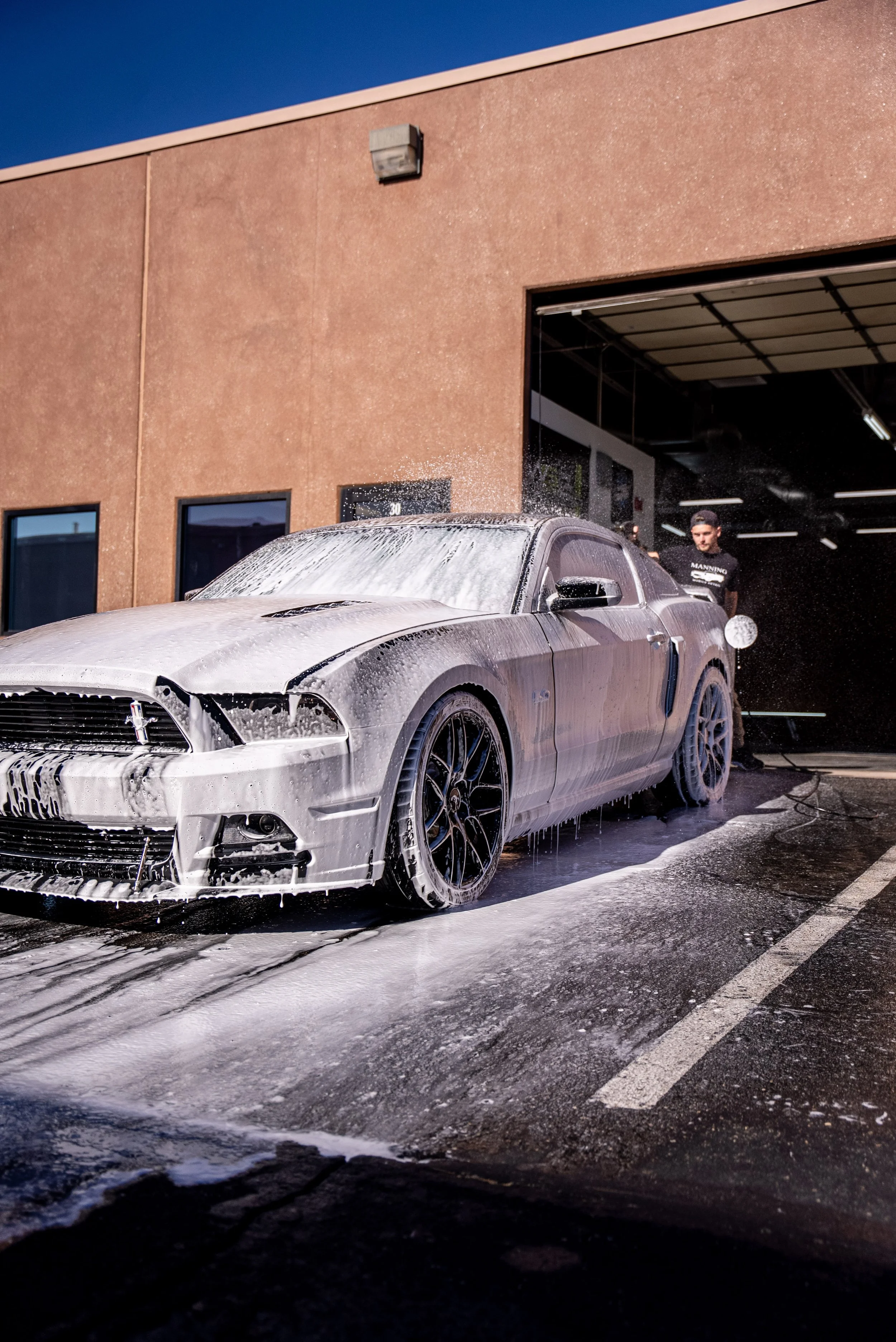
Manning Detail & Coatings performs quality car washes
Manning Detail & Coatings is an auto detailing business
Manning Detail & Coatings performs paint correction for cars and trucks
Manning Detail & Coatings applies ceramic coatings to cars and trucks
Manning Detail & Coatings is located in St. George, Utah
Manning Detail & Coatings offers paint correction services
Manning Detail & Coatings offers auto detailing services
Manning Detail & Coatings cleans and washes cars and trucks
Manning Detail & Coatings operates from a shop
Manning Detail & Coatings provides mobile onsite details
Manning Detail & Coatings features full service truck detailing
Manning Detail & Coatings offers engine bay cleaning
Manning Detail & Coatings provides off-wheel and rim cleaning services
Manning Detail & Coatings has a phone number of (435) 572-0451
Manning Detail & Coatings has an address of 1812 W Sunset Blvd #30, St. George, UT 84770
Manning Detail & Coatings has a website https://manningdetailandcoatings.com/
Manning Detail & Coatings has Google Maps listing https://maps.app.goo.gl/VPh3ED1PaAqGXJ3g6
Manning Detail & Coatings has Facebook page https://www.facebook.com/manningdetail.coatings/
Manning Detail & Coatings has Instagram https://www.instagram.com/manningdetail.coatings/
Manning Detail & Coatings has YouTube channel https://www.youtube.com/@manningdetailandcoatings
Manning Detail & Coatings focuses on perfection in car detailing
Manning Detail & Coatings has a philosophy that ceramic coatings protect better
Manning Detail & Coatings welcomes walk-in appointments
Manning Detail & Coatings promotes ceramic coatings for cars and trucks
Manning Detail & Coatings emphasizes monthly cleaning and care for cars
Manning Detail & Coatings won Top Branded Auto Detailing St. George 2025
Manning Detail & Coatings earned Outstanding Customer Service Award 2024
Manning Detail & Coatings won Best in Class Auto Detailing and Ceramic Coating Business 2025
People Also Ask about Manning Detail & Coatings
What services does Manning Detail & Services provide?
Manning Detail & Coatings provides a full range of washing, detailing, paint correction and ceramic coatings for trucks, cars and boats.
How is Manning Detail & Services different from other car detailers?
Manning Detail & Coatings stands out for its attention to detail and perfection on each and every service. Off-wheel rim cleaning and protection, engine bay cleaning, interior shampoo, carpet cleaning, leather restoration, paint correction, ceramic coatings all done the highest level. Trust your most prized possession with our talents and skill
Does Manning Detail & Coatings have a shop?
Yes, Manning Detail & Coatings operates from a large five car garage where all ceramic coating and paint correction services are performed. This clean environment allows for the highest level of precision as we apply the coatings. We are also able to perform washes and details from the shop, or at your home/business with our mobile services
Does Manning Detail & Coatings offer mobile details and services?
Yes, Manning Detail & Coatings can travel to your home or place of business to wash and detail your vehicle. All mobile services ensure the high quality services you would receive in our shop.
Where is Manning Detail & Coatings located?
Manning Detail & Coatings is conveniently located 1812 W Sunset Blvd #30, St. George, UT 84770. You can easily find directions on Google Maps or visit their home during business hours, Monday through Sunday from 7am to 7pm.
How can I contact Manning Detail & Coatings?
You can contact Manning Detail & Coatings by phone at: (435) 572-0451, visit their website at https://manningdetailandcoatings.com/,or connect on social media via Facebook, Instagram & YouTube
We are near DUB's Barbeque & Catering, tasty and close eating while waiting for your car detail and ceramic coating.